Over the past 15 years, the UK government has made changes to its welfare system with the aims of simplifying how benefits are given out, encouraging people into work, ensuring fairness, and achieving savings. Two key policies implemented as part of these reforms are:
The Two Child Limit restricts the support provided to families through the benefits system (tax credits, Housing Benefit or Universal Credit) to the first two children in a family born after 6 April 2017. The Benefit Cap places an upper limit on the total amount of certain benefits a household can receive (if no adult earns more than the equivalent of 16 hours a week at the National Living Wage), regardless of their assessed needs.
There is little understanding about how these policies are impacting families in their everyday lives. The Department for Work and Pensions (DWP) have reported that over 1.6 million children live in families affected by the Two-Child Limit; and 300,000 children live in families that are subject to the Benefit Cap. Around 140,000 children are living in households subject to both policies. As the Two-Child Benefit Limit applies to children born after 6 April 2017, the number of children affected grows each year.
We carried out a rapid review of different research reports and studies which have used qualitative work to explore the relationship between the benefit cap and/or two child limit on the health and wellbeing of children and young people (aged 0-16). Rapid reviews combine the results of lots of different research, to draw overall conclusions on the topic. We looked at qualitative work which explores people’s experiences and views. We found 23 different studies, papers, and reports which looked at the impacts of benefit cap and/or two child limit on the health and wellbeing of children and young people.
Public Involvement and Engagement
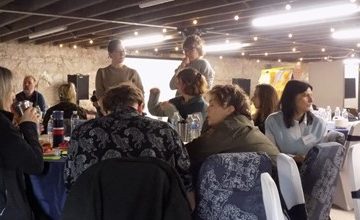
Across our project, we had several meetings with young people aged 12-23 years from the Young People’s Advisory Network in North East and North Cumbria, and with parents living on a low income who attend a weekly drop-in session at Families in Action Together (Wealdstone Baby Bank) in London. These meetings were used to shape the research and help interpret our findings . Working with the groups encouraged the research team to consider multiple pathways to impact, including both positive and negative effects of the policies on social, health and educational outcomes. One of our public partners, Jacob, aged 12, recently shared his views and opinions about the two child limit in this blog.
What we found
We found that the benefit cap and two child limit are making it harder for children to get what they need to be healthy and happy. Families are falling into a cycle of borrowing and debt and are cutting back on everyday essentials like food, bills, clothes, school supplies. Parents are struggling to provide nutritious food for their children. Children are missing out on ‘normal’ childhood activities like hobbies, school trips and days out.
This is putting huge pressure on families, causing worry, sadness, and often making people feel ashamed and embarrassed. Parents live with feelings of stress and anxiety about money. Parents feel deep shame and guilt because they can’t provide everything their children need. We found evidence that children understand and feel this stress and worry, as a result, family life and relationships suffer.
Out study showed that this is making life even tougher for families who are already struggling the most. The policies make families much less secure, often pushing them into poverty or making their poverty even worse. Some families are hit harder than others: single-parent households, certain faith communities, ethnic minority families, social housing residents, those with insecure jobs, and families with a health condition or disability). Unexpected issues can be devastating (e.g. getting sick or losing a job can push families who were managing into hardship).
The evidence shows that the two-child cap is adding to other problems in society which worsen the policies’ impact. The rising cost of living is a huge issue, making everything more expensive for families. Cuts to local services are hurting families – there are fewer play areas, fewer youth clubs, and local support services have been reduced. Finding work that fits family life is tough (especially with the high cost of childcare). There isn’t enough affordable housing and can’t often move to cheaper homes to save money.
What does this mean?
Our review highlights the extent of negative health and wellbeing impacts on children, young people and families from the Benefit Cap and Two Child Limit. The Benefit Cap and Two Child Limit policies contrast with the ethos of social security as a ‘safety net’ – the policies are pulling families into, and further into, poverty. Despite aiming to ‘ incentivise paid work’, there is limited evidence the policies are changing behaviour. The Two Child Limit and the Benefit Cap are based on assumptions (around family planning, contraception, employment positions) that do not always reflect the reality of people’s everyday lives. Our review provides key evidence to support the government’s recent announcement to scrap the Two Child Limit. This is a decision that will change the lives of children across the country and remove a key driver of child poverty. We eagerly await publication of the Child Poverty Strategy, designed to address the ‘structural and root causes of child poverty across the country’.
Further reading
Further information, including links to outputs, can be found on our project page
Department for Work and Pensions Analysis (2025) Removing the two-child limit on Universal Credit: Impact on low income poverty levels in the United Kingdom.
Hannah Fairbrother1, Nicholas Woodrow1, Lindsay Blank1, Mark Clowes1 and Mandy Cheetham2
1.University of Sheffield, 2.Gateshead HDRC/ Northumbria University
This project was funded by the National Institute for Health and Care Research (NIHR) School for Public Health Research (Grant Reference Number NIHR 204000). The views expressed are those of the author(s) and not necessarily those of the NIHR or the Department of Health and Social Care.


0 Comments